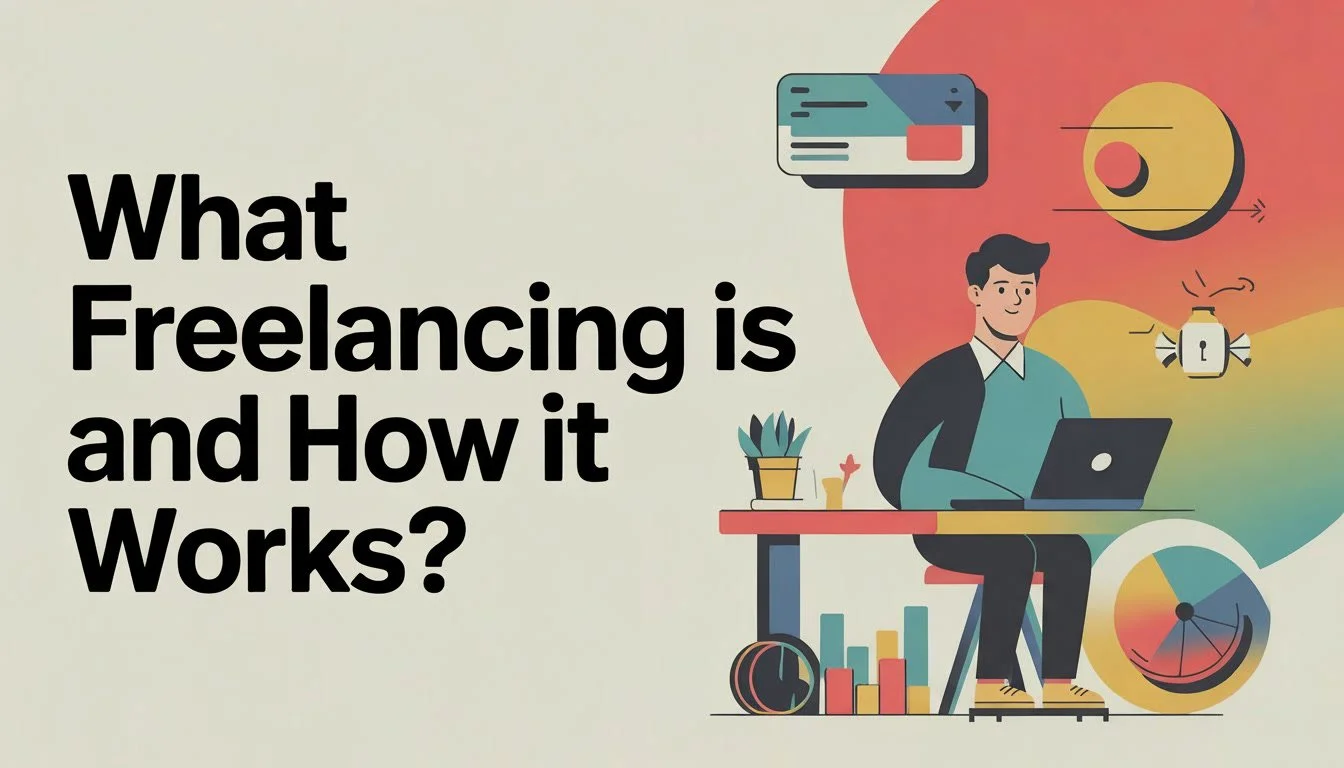
When newbies hear about what it means to be a freelancer, they can only think of things such as sitting on their laptop on a beachside with a cup of coffee, typing responses to clients at their own convenient times. This looks good on social media. The reality of it is wearing Pajamas, repairing minute errors on a midnight shift, wondering for what reason clients have sent them a response like “Can you do one small change?” for what seems to be the fifth time already.
Nevertheless, freelancing is an option that succeeds if one grasps what it actually involves.
So, what exactly is freelancing?
Freelancing means doing this work independently and providing your skills and services to a variety of clients as opposed to being an employee working for a single organization on a full-time basis. You are neither an employee nor are you a boss of any kind. You are somewhere in between, and that’s quite thrilling and confusing too!
As a freelancer, you will be paid for:
- A project
- A task
- Or a fixed number of hours
You don’t automatically get paid every month. You make money because you work. Work? No money. It does sound frightening. What I mean is that there are no boundaries.

How freelancing usually starts?
Most people don’t just wake up and realize that they are successful freelancers. The freelancing career usually begins quietly.
- You master a skill.
- You practice it.
- You make a little profile, say online.
- You apply for employment.
- You are ignored.
You reapply. You finally get the first client. The first client is very significant, even if he or she pays very little, because this person confirms one very important thing: a stranger on the internet trusted you with money. That’s very significant.
What kind of work do freelancers do?
Freelance is no single job but a system.
People freelance as:
- Graphic designers
- Video editors
- Social Media Managers
- Web Developers
In essence, as long as a task can be accomplished on a laptop connected to the internet, there is some individual willing to pay for it.
It is not at all necessary that you have to be one of the best in the world. It is sufficient that you are good enough to resolve a problem.
How freelancers find work?
It’s at this stage that beginners find themselves panicking.
Freelancers earn money by:
- Freelancing websites
- Social media platforms are
- Networking
- Personal networks
- Referrals
Initially, most of the work will be from platforms. You put up a profile, demonstrate what you can offer, and send bids. Most of the bids will go unanswered. This is quite natural. If you are looking for immediate responses, freelancing will surely humble you in a short while.
Over time, with projects under your belt, you’ll find that it gets simpler to find work. Repeat business becomes regular. Some people begin to refer business to you. This is when freelancing can feel stable.
How payments work?
Freelancers generally charge:
- Per Project
- Per Hour
- Or per month for ongoing work
The ways to pay vary, but the basics are easy: agree on the price first, then do the work. Most new illustrators charge very little at first because they’re scared clients might say no. This is totally reasonable. A lack of confidence usually follows.
The initial purpose of freelance writing is not accumulating wealth. It is to:
- Gain experience
- Build a portfolio
- Learn how clients think
Your money will improve as your skills and confidence develop.
Is freelancing easy?
No, certainly not. Nor, of course, would anyone who is either new or lying when he says so.
Freelancing offers you freedom but also offers you responsibility. You dictate your timing. You dictate your earnings. You dictate your stress. Where else will you find no HR department when someone suddenly goes missing?
There are some months that are really good. There are months when not much happens. Patience is taught really fast when one chooses
But here’s the best part: you will grow quickly. You will learn how to communicate, how to price, how to be disciplined, and how to solve problems. These will be with you for the rest.
Why many beginners quit freelancing?
Most beginners quit freelancing for three main reasons:
- They want quick results
- They compare themselves with experts
- They stop when rejected.
Freelancing favors people who hang around longer. Talent is secondary. Nothing beats dedication.
What freelancing is really about?
Freelancing isn’t all about freelancing less. Freelancing is all about freelancing differently.
Job security is sacrificed in exchange for flexibility.
You are sacrificing fixed income for growth.
You give up comfort for control. It is unsteady at first. It is liberating afterwards.

A Realistic Reminder
Freelancing is not a way to attain success overnight. This is a skill-based process by which you increase your working capacity gradually. If you learn, try to improve, and also be patient, then you can make freelancing your regular source of income.
And trust me, you won’t be working from the beach every day. Sometimes, you will be working from your bed. Sometimes from a noisy room. But the thing about freelancing: it will be your work, on your terms—and that’s what freelancing is all about.
So don’t overthink it. Learn one skill and start. Freelancing is not a skill that rewards well-crafted plans; it rewards people who act.
